
 Modibbo Kawu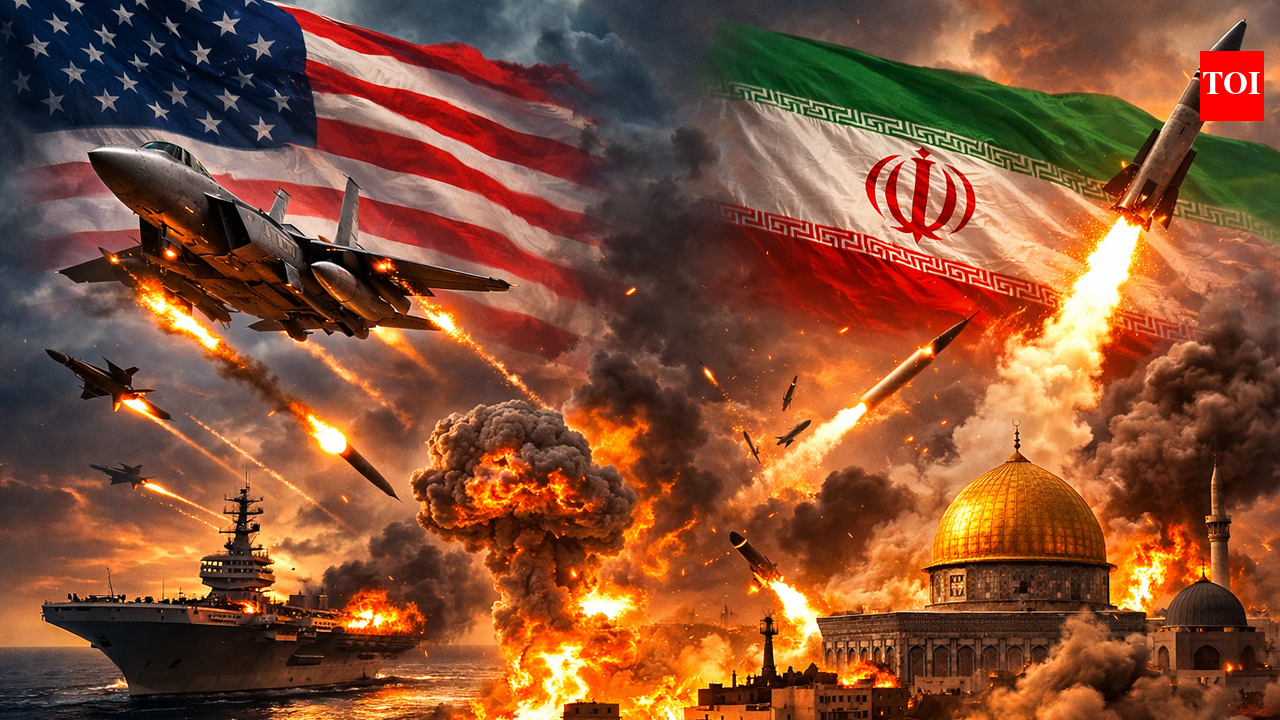
When the United States and Israel launched their illegal attack on Iran on February 28th, 2026, many assumptions underlined what amounted to a frightening blitzkrieg. The Israeli Prime Minister, the war criminal, Benjamin Netanyahu, boasted that he finally got what he had nursed for forty years: to get the United States to attack Iran. It came out later, according to accounts from the New York Times, quoted by several online bloggers, that Netanyahu had actually addressed a White House Situation Room gathering that had all the leading American officials in attendance, on February 12th, 2026, that the time was opportune for the United States to attack Iran.
Netanyahu assured the gathering, which included President Trump, the Secretary of State, Marco Rubio, Secretary for War, Pete Hegseth, CIA Director, John Ratcliffe, and other senior officials, that a decapitation attack on the Iranian leadership would hasten the collapse of the Iranian government. Such a decapitation attack would lead to an uprising of the Iranian people, that Israel guaranteed, was going to follow. The combined power of the USA and Israeli Air forces will decimate the Iranian Revolutionary Guard Corps (IRGC), and
these will directly lead to a new vista of an imperialist installed, and Zionist friendly regime, coming to power in Tehran. The Head of Mossad, David Barnea, appeared on a big screen, to reinforce Netanyahu’s message. No President before Donald Trump, ever took that infamous Netanyahu bait of an attack on Iran; not Clinton, not George W. Bush, not Obama, not even Biden.
Many inside the room on that February 12th, were sceptical about the coaxing from the Zionist war criminal. Even Marco Rubio was said to have described the presented plan as BS. Apparently, the scepticism ran right through the room, but apart from Vice President, JD Vance, no one offered a dissenting viewpoint about a plan to attack Iran. That’s a plan that several American wargame planners had warned in the past, was going to be a disastrous failure, for the United States. In the long run, a Zinonist compromised President Trump, went along with Israel. They jointly launched the perfidious attack on Iran, on February 28th, 2026.
On the very first day of the aggression against Iran, the United States carried out an attack on a school in the southern Iranian city of Minab. A missile strike hit the Shajareh Tayyebeh (The Good Tree) Elementary School, which was packed with students at the time, resulting in the deadliest single civilian casualty incident of the conflict. Reports indicate that at least 150 to 180 people were killed, the majority of whom were girls aged 7 to 12. Approximately 95 others were injured.
Witnesses and rescue workers described a “double-tap” or “triple-tap” pattern, where an initial strike was followed by subsequent hits, while people were attempting to evacuate or rescue survivors. Investigations by groups like Bellingcat, BBC Verify, and Amnesty International, identified the weapon deployed as a US-manufactured Tomahawk cruise missile.
Since Feb 28, 2026, according to Aljazeera, the US and Israel aggressors, have targeted major Iranian installations, focusing on nuclear, missile, and energy infrastructure, including Kharg Island’s oil hub, petrochemical facilities in Asaluyeh, and the Laser and Plasma Research Institute. Other targets included the Sharif University of Technology, Shahid Beheshti University, and various air defense sites.
As of April 12, 2026, the head of Iran’s Legal Medicine Organization reported that 3,375 people killed in US-Israeli strikes have been identified. Other reports, including those from human rights groups, provided varying estimates. Human Rights Activists News Agency (HRANA) documented 3,636 deaths in Iran as of April 7, including 1,701 civilians (there were at least 254 children killed) and 1,221 military personnel. On its part, the Iranian Ministry of Health, reported 2,076 killed, including 240 women and 212 children, as of April 16. Hengaw Organization for Human Rights estimated that over 7,650 people had been killed, citing higher military casualties.
On the other hand, from the commencement of the US/Israel aggression, Iranian forces targeted Israeli military and civilian facilities, including the Bazan oil refinery in Haifa, the Dimona nuclear site, and multiple urban areas like Tel Aviv, Petah Tikva, and Ramat Gan with missiles and drones. Key infrastructure and sites, including the Shin Bet headquarters and IDF bases, such as Palmachim and Ovda Airbase, were hit, causing significant damage and casualties.
Relatedly, Iran also executed a campaign of drone and missile strikes, targeting critical infrastructure in neighboring Gulf Arab states. The Iranian retaliatory strikes were aimed against the U.S. military bases and installations in these countries; facilities used in the attacks on Iran. Iran also targeted energy infrastructure and economic sites, resulting in significant damage, particularly in Bahrain, the UAE, Saudi Arabia, and Kuwait. The key infrastructure and systems damaged or destroyed, included in the main, energy and petrochemical facilities.
In respect of military and communication systems, Iranian attacks destroyed radomes (protective radar domes) and SATCOM terminals at U.S. military bases in Bahrain, Qatar, Kuwait, Saudi Arabia, and the UAE. In Bahrain, a drone attack set fire to a storage tank at a Bapco Energies site.
Iran also significantly damaged some of the industrial and economic hubs in the UAE; while a power and water desalination plant in Kuwait was damaged, leading to the shutdown of two electricity-generating units. Iranian strikes also impacted commercial areas, including Dubai’s Burj Al Arab and International Financial Centre, as well as several airports.
The attacks, which began on February 28, 2026, involved thousands of projectiles, with the United Arab Emirates bearing the highest number of strikes. These actions resulted in multiple deaths, disrupted shipping through the Strait of Hormuz, and forced the declaration of force majeure on some supply contracts in the region.
By the time that a two-week ceasefire was agreed in the conflict on April 7th, 2026, several salient Geo-Strategic issues had become very clear to observers. At the onset of the US/Israel aggression, the Americans demanded Iran’s “unconditional surrender”. President Trump told Iranians that help was on the way, to assist them overthrow their government, and the two aggressor countries succeeded in killing the Supreme Leader, Ayatollah Ali Khamenei, and other top military and civilian leaders, of Iran.
However, Iran did not surrender as was demanded. On the contrary, it posited remarkable valour, and showed the world the real meaning of asymmetrical warfare, in a manner that confounded US Imperialism and the Zionist Israeli regime. What unfolded was a war of national survival, an existential war, for Iran, while the world witnessed a war of choice, by the United States President, Donald Trump, at the behest of the war criminal, Benjamin Netanyahu, and in defence of Israel.
There were indications that Iran had been preparing for the joint aggression following the American invasions of Afghanistan, Iraq, Libya, and Syria. The Iranians knew that an aggression against their country was only a matter of time. Similarly, Iran also studied the different wars of resistance to American Imperialism, but especially the manner that the Vietnamese had used underground facilities to fight, and finally defeat, the United States.
It was the United States that desperately needed a ceasefire, despite the propaganda to the contrary, and it was infact indicative of how the conflict had shaped up, that in setting out the parameters for the ceasefire, President Trump accepted Iran’s Ten-Point proposal, as a basis for negotiations, following the ceasefire.
Before the outbreak of hostilities, Iran didn’t control the Strait of Hormuz, but following the aggression, it took over control and effectively loosened the punishing sanctions that it had lived under, for decades. Before the outbreak of the Russia-Ukraine war in 2022, Iran was the most sanctioned country in the world!
According to Aljazeera, as of mid-April 2026, Iran earned nearly $5 billion in oil exports over the past month, while enforcing a $100+ per barrel price and charging transit fees of up to $2 million per commercial vessel. To underscore its control of that vital choke point of the waterway, Iran also directed that these transit charges be paid in Chinese Yuan, not in American Dollars.
Iranian daily oil revenue was similarly estimated at approximately between $139-$140 million, shortly after asserting control in late March 2026. An Iran Chamber official was reported to have even projected between $70-$80 billion in annual income, from the strait. Iran’s oil revenue increased by 40 percent in the first month of the crisis, compared to February, 2026. This is not the consequence that had been envisaged nor planned for, when the United States and Israel launched the aggression of February 28th, 2026. Stripped of any form of subterfuge, the war of aggression against Iran, was a disaster for the United States. It also deepened the international economic crisis that the conflict had triggered.
Effectively, the United States President, Donald Trump, transitioned Iran from a regional power, into a world power, which now controls 20 percent of the world’s energy supply. This has been achieved through the control of the Strait of Hormuz, the imposition of a tolling system that many shipping outfits and countries dependent on the oil resources of the region, began to willingly adhere to, despite American opposition.
Unfortunately for the United States, it also became clear that US aircraft carriers and other naval vessels are limited in effectiveness, especially in terms of the blockage of the Strait of Hormuz. If they sailed too close and came within range of Iranian missiles and drones, they can face terrifying outcomes. Iran coastline is a No-Go zone for the US Navy because that places American vessels within Iranian missiles range.
The new form of asymmetrical warfare, with drones and missiles, is redefining warfare, and there’s the danger that aircraft carriers are becoming an obsolete and terribly expensive wares in contemporary warfare.
At a very fundamental level, Iranian retaliatory attacks on the Gulf Arab satraps of the United States underscored the ineffectiveness of the American security cover that they had bankrolled for many years. There were other collateral outcomes which further undermined American hegemonic controls in other parts of the world. For instance, when Iran took out American THAAD anti-missile systems in West Asia, the USA pivoted to East Asia, to dismantle similar systems, ostensibly installed for the protection of South Korea.
South Korea, with a population of about 50 million people, and one of the ten largest economies in the world, was literally stripped naked by the United States. It was given the lesson that for United States Imperialism, Israel is always a more defining priority. This reality was not lost to other American client states,in the East Asian region. It was not a coincidence, that the new leader of the opposition Kuomintang (KMT)Party in Taiwan, Cheng Li-wun chose the time of hostility in West Asia, to pay a well publicized visit to Beijing. She spoke plainly that Taiwan should not become the Ukraine of East Asia, as a willing cannon fodder, in a war against China.
Arguably, the most important Geo-Strategic variable must be the enhanced position of China in the overall chess board of international superpower rivalry. That manifested in several ways. The first, was that the aggression against Iran forced the United States to dangerously deplete strategic arms reserved for a potential conflict against China in East Asia.
Pentagon planners confronted the reality that every cruise missile fired, every anti-missile interceptor launched in the Iran conflict, was one less from a depleting reserve. This is at a time that China has imposed export controls on rare earth metals, needed to produce replacements of these weapons, by the American military-industrial complex. Access to rare earths is very much restricted by China.
On the other hand, according to Carl Zha, host of the Silk & Steel Podcast on China, before and after the June 2025 war launched by Israel and the United States against Iran, and in the lead to the most recent conflict, China had supplied Iran with enough chemical precursors, for it to continue the production of the different varieties of missiles and drones, that Iran introduced into the war.
It has also been a very expensive war of aggression for the United States. By mid-April, 2026, estimates of cost of the war varied, between $11.3b in the first six days, to over $43b within 40 days. The high expenditure was driven by extensive munition use, reaching $900 million daily, and over $2b per day, in some projections quoted by Aljazeera and the Washington-based Centre for Strategic and International Studies (CSIS). The New Arab suggested costs close to $2b per day.
The United States also suffered the destruction of very expensive radar systems installed in the Gulf Arab countries, and the near-obliteration of its military bases in those countries. It also suffered significant damage to very expensive air defence systems, like the THAAD and Patriots anti-missile systems, it lost F-15 and A10 fighters, early warning systems, and so on.
This reality provided the backdrop for the declaration of a ceasefire between the belligerent parties on April 7th, and that took effect, the following day, the 8th of April. It had been brokered by Pakistan. The United States President, Donald Trump, announced that Iran’s 10-point ceasefire plan was acceptable basis for negotiations between the two parties.
The so-called Islamabad Talks were convened on April 11th-12th, 2026. The American delegation was led by Vice President, JD Vance, accompanied by the two real estate moguls, Jared Kushner and Steve Witkoff (who are not trained in diplomacy), while the Iranian delegation was led by Parliamentary Speaker, Bagher Ghalibaf and Foreign Minister, Abbas Araghchi. These marathon talks continued for 21 hours, but unfortunately, did not lead to any agreements.
The Iranian side, arrived in Islamabad with full powers to reach an agreement on all the issues at stake, namely the controversy around the control of the Strait of Hormuz, Iranian nuclear programme, and regional issues. They later reported that it seemed the American delegation did not come with the same powers.
The Iranian Foreign Minister Abbas Araghchi, reported that Vice President, JD Vance, made several telephone calls back to Washington, apparently to get directives on the negotiations. It was later revealed that Vance also made calls to the Israeli Prime Minister, Netanyahu.
This was confirmed on April 13th, when Benjamin Netanyahu, addressed an Israeli cabinet meeting, stating that he received a detailed phone call from the United States Vice President. His statement as reported by several news outlets was that: “He (Vance) reported to me in detail, as members of this administration do everyday, about the development of negotiations”.
A sticking point from the ceasefire was Lebanon. The status was disputed by the two parties. Iran had insisted that the ceasefire covered Israeli aggression in Lebanon, and this was disputed by the Americans. However, the Pakistani, who had brokered the ceasefire, stated explicitly that the situation of Lebanon, was included in the ceasefire deal.
On the day that the ceasefire came to effect, April 8th, Israel launched what it called “Operation Eternal Darkness”, which led to the bombing of over 100 locations in a span of just 10 minutes. The strikes killed at least 357 people and injured over 1,200.
So much else has happened in the wake of the ceasefire, including the tightening of Iranian control of the Strait of Hormuz as well as the imposition of a naval blockade by the United States. The ceasefire is very tenuous, but it continues to hold. However, the biggest elephant in the room, continues to be China’s strategic position in the entire scenario in West Asia. It is clear to geostrategic observers, that China is the ultimate challenge for the United States.
As part of the heightened strategic rivalry between the two countries, the Chinese have always been wary of the possibilities of United States closing the choke points in the world: the Panama Canal, the Strait of Malacca, and the Strait of Hormuz. Such an eventuality will block China’s access to the energy to power its ever-growing economy.
In response to that possibility, China took time to build a strategic reserve; it also diversified assets; increased energy import from neighbouring Russia, and elsewhere. In a 10-15 year period, China invested massively in alternative energy infrastructure, which has positioned China to lead the pivot to renewable, alternative energy sources. This was to prepare for that eventuality of a US attempt to blockade energy access.
China also built up strategic petroleum reserves; it similarly diversified energy sources; it added 543 Gigawatts in new power capacity in 2025, more than any other country, with coal and wind capacity, at a record high. The total power capacity additions in China since 2021, exceed the size of the entire US grid, according to an article of Jan 28, 2026, written by Irina Slav, a writer for oil price.com.
China now generates more than double the electricity of the United States. It has massive coal reserves, holding roughly 13.3 percent of the world’s recoverable coal reserves, according to Worldometer. It holds 900 million barrels of strategic petroleum reserves; its economy grew by 5% in the first quarter of 2026, beating expectations of 4.8%.
While the United States has been obsessed with blockade of the sea lanes, China and Iran had been building a land train, the Euro-Asia route, within the Belt and Road Initiative. The China-Iran railway corridor stretches 100,400 kilometers, connecting Xian and Urumqi in China, to dry ports near Tehran, traversing Kazakhstan, Turkmenistan and Uzbekistan. It reduces delivery time from 30-40 days by sea, to approximately 15 days, by rail. The line went live in 2025, and was already carrying 60 trains from China destined for Iran, by the time of the US-Israel aggression of February 28th, 2026.
It was therefore no surprise, that the bridges serving the line were bombed by Zionist Israel, during the war; but they were immediately rebuilt, by the Iranians. The financing for the new railway came from a $400b economic agreement between the two countries, signed in 2021.
It is safe to remark that the United States of America is fighting a 20th Century maritime war, against a 21st Century continental alliance, according to the analyst, Carl Zha.
The US possesses the most powerful maritime force in history, but it is also much clearer, that an aircraft carrier cannot stop a freight train traversing Kazakhstan. So, China’s Belt and Road Initiative isn’t just an economic project; it is also a strategic bypass mechanism, designed for the unfolding scenario in West Asia. China is aware that the USA could attempt to choke off the Malacca Strait and the Strait of Hormuz. It therefore spent $1 trillion to build roads and railways across the Asian continent, to make the US Navy irrelevant. In trying to enforce a maritime blockade, the US has been confronted with a shift in the strategic equation.
So, China’s Belt and Road Initiative isn’t just an economic project; it is also a strategic bypass mechanism, designed for the unfolding scenario in West Asia. China is aware that the USA could attempt to choke off the Malacca Strait and the Strait of Hormuz. It therefore spent $1 trillion to build roads and railways across the Asian continent, to make the US Navy irrelevant. In trying to enforce a maritime blockade, the US has been confronted with a shift in the strategic equation. The centre of gravity in global trade is gradually moving from the oceans to the land. Blockade works, only when a powerful country like the United States, controls all exits. While it is true that the US controls the water, the future of the global economy, is being constructed on land. The geopolitical centre of gravity is shifting to the Eurasian land mass. Not realizing this fact, is leading to strategically wasteful calculations, by the United States of America. The illegal attack on Iran is a tragic plank of these wrong headed strategic calculations.
Is’haq Modibbo Kawu, FNGE, holds a doctorate degree in Defence and Strategic Studies, from the Nigerian Defence Academy, Kaduna.
Abuja, May 5th, 2026.